The Wildtern Font: Capturing the Spirit of the Old West in Modern Design
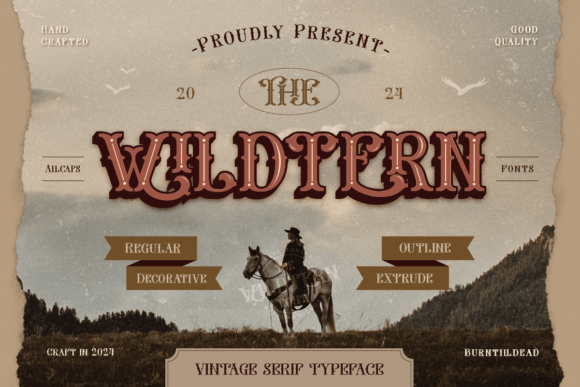
The Wildtern font is more than just a typeface; it's a portal to the rugged charm and enduring legacy of the Wild West. Designed with a deep respect for 17th-century typography, The Wildtern brings the essence of frontier life into contemporary design projects. Whether you're creating marketing materials, posters, logotypes, or product tags, this font offers a unique blend of historical authenticity and decorative flair that sets it apart from modern alternatives.
A Typographic Homage to the American Frontier
Rooted in the typographic styles that emerged during the early 17th century, The Wildtern reflects the evolution of lettering used in saloons, newspapers, and signage across the American West. This era saw the rise of bold, hand-drawn fonts that conveyed strength, independence, and a touch of rebellion—qualities still embodied by The Wildtern today.
By incorporating subtle serifs and ornate embellishments, the font evokes the look of old-west woodcut prints and vintage advertisements. These details aren't just aesthetic choices; they serve as visual cues that transport viewers into an imagined world of cowboys, pioneers, and dusty trails. For designers seeking to evoke nostalgia or add character to their work, The Wildtern provides an authentic yet versatile solution.
Design Characteristics That Define the Old West Aesthetic
The Wildtern features several distinctive characteristics that make it ideal for designs aiming to capture the spirit of the American frontier:
- Bold Strokes: The thick, confident lines of The Wildtern mirror the robust nature of western typography from the past.
- Ornamental Flourishes: Decorative elements such as swashes and ligatures enhance the font’s nostalgic appeal without overwhelming its readability.
- Historical Roots: Inspired by early printing techniques, the font maintains a connection to the past while being optimized for digital use.
- Versatility: Despite its traditional feel, The Wildtern adapts well to a variety of media, from print to web-based platforms.
These traits collectively contribute to a sense of timelessness, making The Wildtern suitable for both commercial and creative endeavors.
Practical Applications Across Industries
Because of its rich visual identity, The Wildtern finds application in multiple fields:
- Brand Identity: Businesses in the hospitality, beverage, and outdoor sectors often use this font to create logos that reflect ruggedness and tradition.
- Marketing Materials: Posters, flyers, and brochures benefit from the font’s attention-grabbing style, especially when targeting audiences with an affinity for Americana or rustic themes.
- Product Packaging: From whiskey bottles to leather goods, The Wildtern enhances packaging with a sense of heritage and craftsmanship.
- Event Promotion: Western-themed events, rodeos, and festivals can leverage the font to create eye-catching promotional content that resonates with the theme.
Its adaptability allows professionals to maintain brand consistency while infusing their designs with personality and storytelling potential.
Why Choose The Wildtern Over Other Western Fonts?
In the crowded space of western-style fonts, The Wildtern stands out due to its balance between authenticity and usability. Many similar fonts lean too heavily on exaggerated shapes or poor legibility, which can limit their practical value. However, The Wildtern manages to retain its classic appeal while ensuring clarity at various sizes.
One key advantage is its ability to complement other design elements without overpowering them. Unlike overly stylized options that might clash with photography or illustrations, The Wildtern harmonizes well with rustic textures, vintage images, and even minimalist layouts. It also supports a wide range of characters and symbols, allowing for greater flexibility in different languages and contexts.
Real-World Use Cases
Several notable brands and creators have successfully integrated The Wildtern into their projects:
- A craft brewery in Colorado uses The Wildtern for its logo and label designs, enhancing the perception of quality and tradition among customers.
- A line of handmade cowboy boots showcases the font on product tags and website headers, reinforcing the artisanal and timeless nature of the items.
- An independent filmmaker employed The Wildtern in promotional posters for a documentary about 19th-century pioneers, giving the material a period-appropriate look.
These examples demonstrate how the font can be effectively used to build a cohesive visual language that aligns with a brand’s message or project’s narrative.
Considerations When Using The Wildtern
While The Wildtern is highly expressive, there are some considerations to keep in mind when using it in professional settings:
- Legibility: Although visually striking, the font may not be ideal for large blocks of text. It works best for headlines, titles, and short phrases where impact matters most.
- Color Contrast: To ensure readability, pair the font with appropriate background colors. Darker shades like brown or black typically highlight the font’s intricate details better than lighter tones.
- Spacing and Kerning: Because of its ornamental nature, careful adjustment of spacing is necessary to maintain visual harmony and avoid clutter.
- Contextual Fit: Consider whether the old-west vibe aligns with your target audience and overall branding strategy. While perfect for certain niches, it may not suit all industries or messages.
Designers should also experiment with complementary fonts to create contrast and hierarchy within their layouts. Pairing The Wildtern with a simpler sans-serif font, for example, can help guide the viewer’s eye and prevent visual fatigue.
Enhancing the Experience with Sound and Setting
For those who want to fully immerse themselves in the design process, pairing The Wildtern with the right atmosphere can inspire creativity. As suggested, listening to country music while working with this font can enhance the experience, helping to channel the mood and energy of the American West into every project.
Whether it’s the twang of a steel guitar or the steady rhythm of a fiddle, these sounds can influence the tone of the design and encourage a more authentic approach. Some designers even incorporate audio descriptions of the west—such as the sound of hooves on dirt roads or a distant train whistle—to further engage their senses and ideas.
Implementing The Wildtern in Digital Workflows
Thanks to its digital optimization, The Wildtern is easy to implement in modern design software and online platforms. Most font libraries offer it in standard formats like TTF or OTF, compatible with Adobe Creative Suite, Canva, Figma, and other popular tools.
When embedding the font on websites, ensure it loads efficiently by using web-safe formats such as WOFF or WOFF2. Responsive design practices should also be considered, as the font’s ornate features may appear differently on mobile screens compared to desktop displays.
Here’s a quick implementation checklist:
- Download and install the font file on your system or through a font hosting service.
- Select the appropriate weight and style based on your project’s needs (e.g., regular, bold, italic).
- Use CSS to import the font if embedding it on a website.
- Preview the font in context before finalizing the design.
Combining The Wildtern with Visual Elements
To maximize the font’s effect, consider integrating it with imagery and textures that reinforce the old-west theme. Distressed paper effects, sepia-toned photographs, and vintage illustrations can enhance the font’s historical feel.
For instance, using The Wildtern alongside a faded map or a weathered wooden sign gives the design a layered, nostalgic depth. In graphic novels or book covers, it can signal a story rooted in the past or infused with adventure.
Trends and Relevance in Today’s Market
There has been a resurgence of interest in vintage and retro aesthetics across various industries, and The Wildtern fits perfectly within this trend. Consumers are increasingly drawn to products and brands that tell a story, and this font helps communicate that narrative through visual means.
As businesses seek to differentiate themselves in a competitive market, The Wildtern offers a way to stand out by embracing a distinct visual identity. Its popularity is growing among small business owners, indie designers, and content creators looking to add a personal touch to their work.
Educational and Research Value
For educators and researchers studying typography history, The Wildtern serves as an excellent example of how historical influences shape modern design. It can be used in classroom presentations or academic papers to illustrate the development of western typography and its cultural significance.
Students exploring font design or branding strategies can analyze The Wildtern to understand the balance between artistic expression and functional design. It also highlights how digital typography can preserve and reinterpret historical styles for new generations.
Conclusion
The Wildtern is more than just a font—it's a design tool that captures the imagination and conveys a powerful sense of place and time. By blending the classic elements of 17th-century typography with modern enhancements, it offers a unique opportunity to connect with audiences through visual storytelling.
Whether you’re a designer, educator, marketer, or hobbyist, The Wildtern provides a valuable addition to your toolkit. Its versatility, historical roots, and decorative appeal make it a standout choice for anyone looking to infuse their work with the enduring allure of the Wild West.